13/01/2011
Showcase: FRACT
Those of you present at last week’s January Social know that we’d like to showcase more of the awesome game design scene here in Montreal—be it events, game art, game demos, or anything else game-related, digital or analog.
Those at the meetup should therefore also be familiar with our first feature! We saw several awesome games during our open-mic demo session, more about which we’ll be posting in the coming weeks. Among them was a game that’s generating a bit of buzz at the moment: Richard Flanagan’s FRACT.
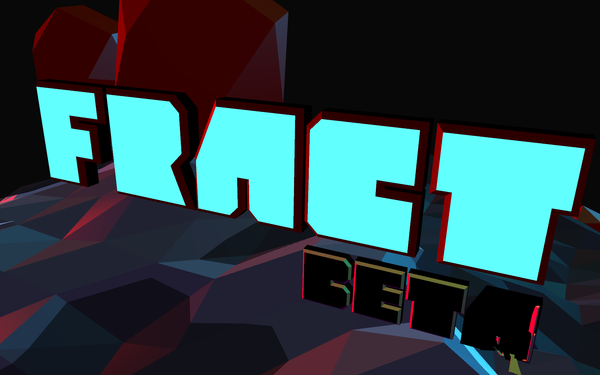
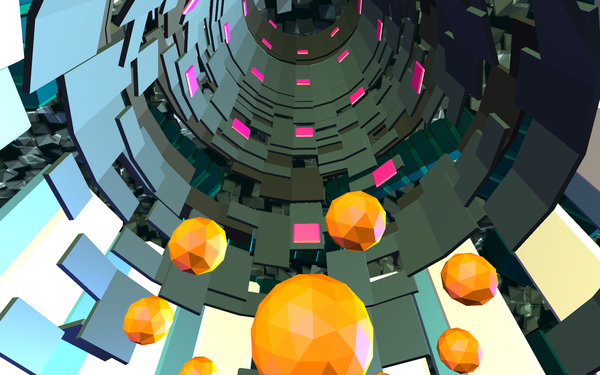
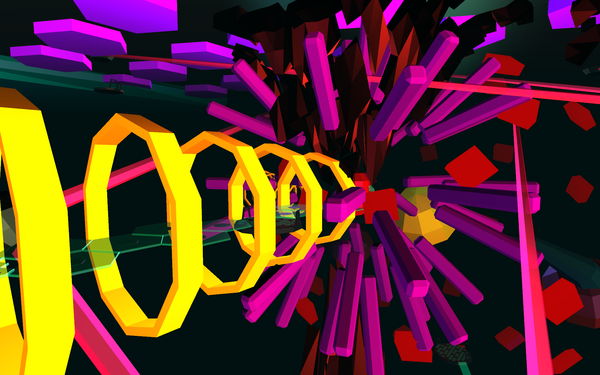
The consensus (perhaps somewhat encouraged by Flanagan) pegs the game as a cross between the relaxed, exploratory gameplay of Myst and the visual style of Disney’s TRON: players move around a surreal landscape, observing and experimenting with the interconnectedness of the environment’s strange machinery. Something of a design & interface geek, Flanagan has already imbued the world with a strong and tangible visual and aural language—do play this one with a good set of headphones, as the game suggests.
Despite still being in beta, FRACT is already turning heads—so much so that it was recently selected to be part of this year’s IGF Student Showcase. Which is kind of an amazing thing. We asked Flanagan to talk a bit about the game and its critical reception and so, with our thanks and our heartiest of congratulations for its well-deserved acclaim, let’s learn about FRACT, in the designer’s own words…
————
THE DESIGN PROCESS
My design process on FRACT was a result of two major influences.
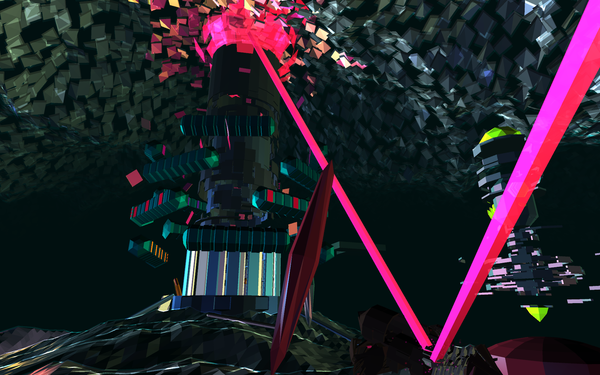
First, the art direction, world, sound and puzzle design are part of a style that has really appealed to me for a long time. When given an opportunity to work within this style, I go for it! (heavily influenced by early computer culture, primitive UI’s, early VR and of course TRON). I’ve got a softspot for design that acknowledges its transmission mechanism, and electronic music/game/computer culture is especially good at this. Another big influence on FRACT‘s gameplay and design was early point-and-click adventure games. While “classic” adventure games are no longer in fashion, I think there is still tons of potential for really special interactive moments within contemporary examples in the genre (Heavy Rain, Sam & Max, Monkey Island, etc).
Second was a pragmatic approach to actually building this thing. This was my first time using Unity, so I knew there would be a learning curve (and trust me there was). Furthermore, I was one person working on this, so I had to scale back my expectations in regards to assets and design. I’m no 3D modeler, hence the minimal nature of the space and objects. Similarly, I’m a far cry from what most people would consider a programmer, so the mechanics of the game are very simple (the puzzles are fairly binary in nature). Professional game development teams have entire groups of people devoted to textures. I didn’t have the time or skill required for textures to be a big part of the experience, and therefore there are none in the game (with the exception of the instructions in the beginning and a few floating photos at the end). By eliminating time spent on these aspects of the game, I was able to focus on the things I knew I would be better able to achieve (sound design, world design, puzzles & art direction).
After a few tests (here and here) I had a rough framework for how I hoped to go about it. There were still a lot of hurdles and I scaled down or cut out many of my ideas due lack of time and skill, but in the end I’m proud of where it’s ended up.
ON THE REACTION
Pure disbelief. I could not (and still can’t) wrap my head around the idea that people like this game. I am proud of it from an accomplishment perspective (I’m not always great at finishing things, because I tend to have very ambitious ideas), but I did not expect it to resonate with people the way it has. I built a world that I wanted to play in, within a very simple and old-fashioned style of game. While I was confident that people who understood games would see that I had put a lot of work into something I cared about, I never expected it to connect with people the way it has.
It’s also a bit of a relief as I was starting to feel a bit discouraged. I left a career in design and art direction in web & advertising to pursue game design by going back to school. Since finishing my post-graduate diploma in game design at the Université de Montreal I have been job-hunting, but without success. At first I was applying to junior design positions, and had recently even applied for testing jobs in order to get my foot in the door (without success). Leaving web was a leap of faith, and while FRACT isn’t the penultimate answer (yet) to where I want to be, I feel like I’m pointed in the right direction.
THE FUTURE OF FRACT
I want to build more. FRACT as it is right now is just a sliver of a much bigger idea. Given more time/skill/help the context would not change, but the scale and dynamics of the game would be expanded upon substantially. My goal is to further develop the relationships between interactions, the user, and the world—to provide a deeper and more integrated experience that implicates the player in a more robust creation process (not just a scaled down synaesthetic sequencer, even if that does check off several happy geek boxes in me). I’m definitely looking forward to figuring the next steps for FRACT. Keep you posted!
(Courtesy of Richard E. Flanagan)